
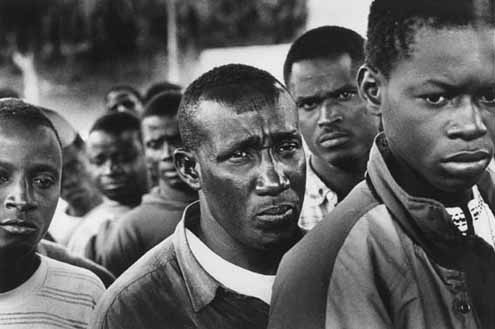
 Gezichten van mannen op zoek naar een beter leven.
Ceuta-fotos
Ceuta is een Spaanse enclave in Marokko, in Noord-Afrika. Het is een stadje met een haven aan de baai van Algeciras.
De mannen komen uit heel Afrika, te voet, per bus, liftend, zonder bagage.
Ze steken de grens met Ceuta over en denken dan in de toegang tot Europa te zijn.
Dat is niet zo.
Ze zitten op het strand, aan de overkant in het zicht ligt Europa.
Hier realiseren ze zich dat Ceuta geen toeganspoort is maar een fuik.
Er is een veerboot, van Ceuta naar het vasteland van Spanje. Maar de Afrikaanse mannen mogen die boot niet op.
In plaats daarvan worden ze opgepakt door de Guardia civil , geregistreerd en in een miserabel vluchtelingenkamp gestopt.
Hier wacten ze. Terug naar Marokko kunnen ze ook niet, Marokko weigert ze de toegang.
Als het kamp te vol wordt kan worden incidenteel mensen toegelaten op de veerboot.
Op de veerboot wordt streng gecontroleerd,alle bagage wordt op drugs onderzocht.
Den Blanken fotografeerde een man met elf kilo hasjiesj in zijn koffer.
Nee, de man was geen Afrikaan, hij was een Nederlander...

Las caras de hombres que desean una vida mejor.
Las fotos de Ceuta
Ceuta es un enclave español en Marruecos, en el norte de Africa.
Es una ciudad pequeña con un puerto en el Estrecho de Gibraltar.
Los hombres vienen de todas partes de Africa. De pie, en autobus,
haciendo autostop. Sin equipaje, sin enseñanza, sin dinero.
Cruzan la frontera entre Marruecos y Ceuta y piensan que llegan a la puerta de Europa. No es asi.
Sentados en la playa, miran hacia el Estrecho. Al otro lado, a la vista, se encuentra Europa.
Aqui los hombres se dan cuenta de que Ceuta no es una puerta.
Es una trampa.
Hay un transbordador, de Ceuta hacia Algeciras, en la España continental. Pero no tienen el permiso de abordar el barco.
Son capturados por la Guardia Civil, registrados y hospedados en un miserable campamento de tiendas.
Aqu? esperan. España no puede devolverlos, porque su vecino, Marruecos, no les permite entrar.
La Cruz Roja Española alimenta a los hombres y, uno a uno, les permite cruzar el estrecho en barco.
A la llegada a Algeciras la Guardia Civil y la Policia Nacional realizan un control.
El norte de Africa es una zona de drogas, por lo que investigan todo el equipaje.
Den Blanken fotografio como un hombre fue capturado con once kilos y medio de hachis en su maleta.
No, el hombre no es africano, es Holandes...
Gezichten van mannen op zoek naar een beter leven.
Ceuta-fotos (version espanol
aqui)
Ceuta is een Spaanse enclave in Marokko, in Noord-Afrika. Het is een stadje met een haven aan de baai van Algeciras.
De mannen komen uit heel Afrika, te voet, per bus, liftend, zonder bagage.
Ze steken de grens met Ceuta over en denken dan in de toegang tot Europa te zijn.
Dat is niet zo.
Ze zitten op het strand, aan de overkant in het zicht ligt Europa.
Hier realiseren ze zich dat Ceuta geen toeganspoort is maar een fuik.
Er is een veerboot, van Ceuta naar het vasteland van Spanje. Maar de Afrikaanse mannen mogen die boot niet op.
In plaats daarvan worden ze opgepakt door de Guardia civil , geregistreerd en in een miserabel vluchtelingenkamp gestopt.
Hier wacten ze. Terug naar Marokko kunnen ze ook niet, Marokko weigert ze de toegang.
Als het kamp te vol wordt kan worden incidenteel mensen toegelaten op de veerboot.
Op de veerboot wordt streng gecontroleerd,alle bagage wordt op drugs onderzocht.
Den Blanken fotografeerde een man met elf kilo hasjiesj in zijn koffer.
Nee, de man was geen Afrikaan, hij was een Nederlander...
© 1997 Rob Ruggenberg).

